

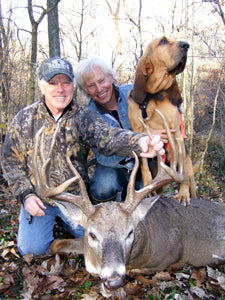
We’re in the heart of bow season, which means many hunters are preparing for the most intense moments of the year—recovering a shot whitetail. Whether you’re a new bowhunter or a seasoned veteran, a quick refresher on blood tracking basics never hurts. For this article, we turned to Tracker John, one of the most respected blood trackers in the Midwest. Each year he helps hunters recover giant bucks, and he sees the same common mistakes again and again. If you want your bow setup dialed in before the shot even happens, explore high-quality accessories at Pine Ridge Archery.
1. Pay Attention to the Details
According to Tracker John, many hunters get so excited after taking the shot that they fail to note critical details.
“Most hunters don’t pay close attention to where the deer was hit or where it ran,” he explains. “This information is extremely important.”
Adrenaline may blur your memory, but try to mentally mark:
-
The exact hit location
-
The deer’s exit direction
-
Landmarks like trees, dips, or brush lines
This information saves valuable time and helps trackers—and dogs—start with accurate information.
To make sure your shot placement is as accurate as possible, consider using precision accessories like peep sights and stabilizers from Pine Ridge Archery.
2. The Waiting Game
One of the biggest mistakes bowhunters make is climbing down too soon. Even seasoned hunters fall into this trap.
“Hunters know they shouldn’t get down immediately, but many do,” Tracker John says. “This often pushes the deer and makes recovery more difficult.”
In most cases, you should wait 45 minutes to an hour before climbing down. This gives the deer time to bed down and expire instead of fleeing farther.
A well-tuned bow setup increases penetration and blood trails. For tuning tools and components, visit Pine Ridge Archery.
3. Only Bring a Friend (or Two)
Tracking with a crowd makes things worse. More boots mean more confusion.
“When too many people walk around, blood gets stepped on or accidentally tracked away,” Tracker John explains.
Instead of bringing a whole group, limit yourself to one or two people. This keeps the scene clean and makes it easier to follow the actual trail.
If you need gear color-matched and easy to find in low light, try NITRO arrow wraps and vanes from Pine Ridge Archery.
4. Bring Toilet Paper
Toilet paper isn’t glamorous, but it’s essential. It’s the standard way to mark “last blood” while tracking.
“Marking last blood helps put the puzzle together,” says Tracker John. “But many hunters forget to bring it.”
Toilet paper is visible, biodegradable, and easy to remove later. Place it lightly near each blood spot to stay organized as you follow the trail.
Pair your tracking kit with durable accessories from Pine Ridge Archery to stay prepared.
5. Make the Call Right Away
Calling a tracker shouldn’t be a last resort.
“Many hunters wait hours or even days before calling,” Tracker John says. “But the older the trail and the more people walking around, the harder it gets.”
If tracking becomes difficult early on, call a professional. The sooner they arrive, the better your recovery odds.
Final Thoughts
Blood tracking is an essential part of ethical bowhunting. By paying attention after the shot, waiting patiently, staying organized, and minimizing disturbance, you dramatically increase your chances of recovering your deer.
And when everything starts with an accurate, well-tuned shot, gear from Pine Ridge Archery can make the difference.
BY TRACY BREEN
More stories

